
How Predictive AI is Shaping Customer Support in the Automotive Industry
How Predictive AI is Shaping Customer Support in the Automotive IndustryBy Gauri Kulkarni | July 21, 2025 | AI & Generative Intelligence
Introduction: Customer Support Is Changing—Fast
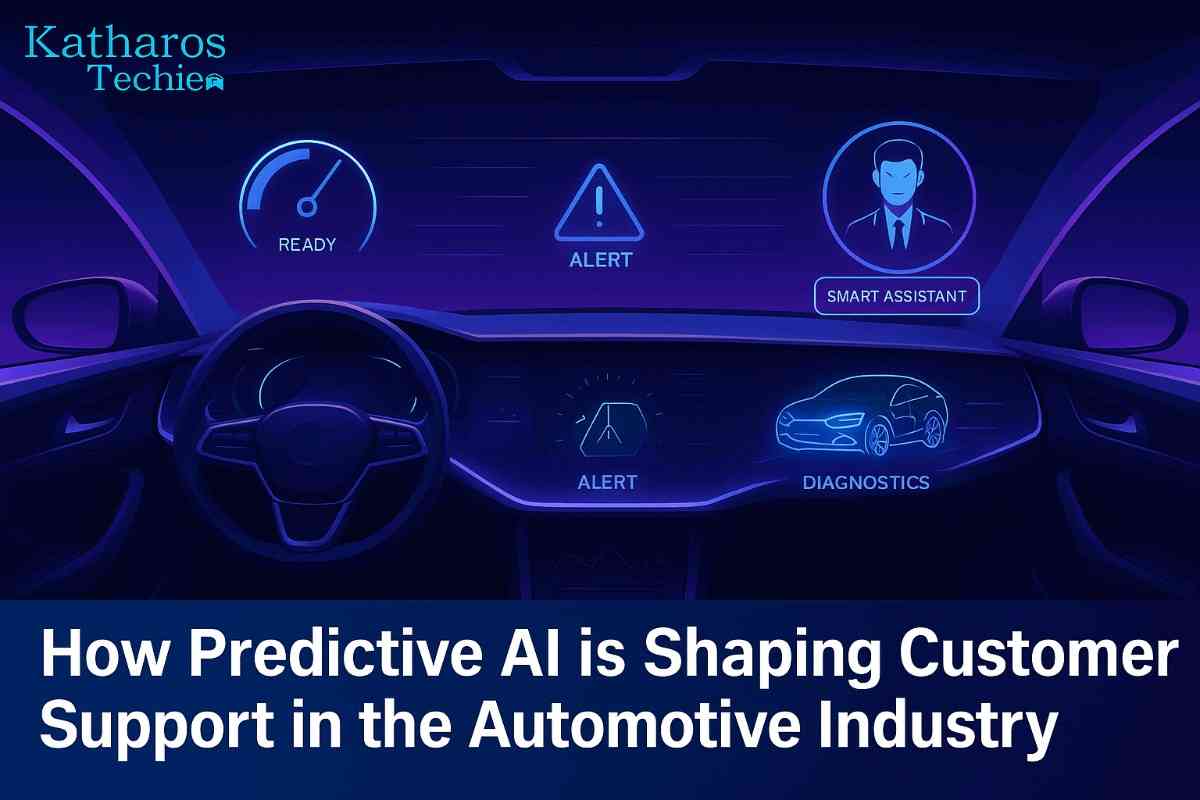
In the age of AI-driven everything, the automotive industry is undergoing one of its most dramatic shifts yet: the transformation of customer support. No longer limited to long call wait times or generic service emails, car brands are investing in predictive AI systems to offer support that’s not just reactive but preemptive, intelligent, and deeply personalized.
From smart diagnostics to AI-powered chatbots, predictive analytics and machine learning are changing how auto manufacturers understand, serve, and even anticipate their customers’ needs.
What Is Predictive AI in Automotive Customer Support?
Predictive AI leverages historical data, real-time inputs, and pattern recognition to anticipate customer needs, often before they're even expressed.
In customer support, this means:
- Identifying vehicle issues early through IoT sensors
- Pre-scheduling service appointments based on driving behavior
- Offering personalized help via chatbots or support reps
- Reducing customer frustration with intelligent routing and self-service tools
For automotive brands, this isn’t just a tech upgrade—it’s a competitive advantage.
SEO Keywords: predictive AI automotive, AI customer support, automotive machine learning, predictive maintenance
Real-World Use Cases: From Diagnostics to Delight
1. Predictive Maintenance and Alert
Modern vehicles generate terabytes of data—everything from engine health to tire pressure. AI systems analyze this data and alert both the driver and the service center before a potential breakdown occurs.
Example: An EV notices an irregularity in battery performance. The system sends an automatic notification, schedules a checkup, and even orders the part in advance.
2. Chatbots That Learn (and Actually Help)
Gone are the days of chatbots that just say, “Please rephrase.” Predictive AI chatbots learn from past interactions, customer sentiment, and product data to offer human-like, context-aware responses.
Kia and Hyundai are testing multilingual, AI-driven chat systems that resolve common customer queries without human involvement, significantly reducing wait times and operational costs.
3. Personalized Offers and Upgrades
Predictive systems also track ownership cycles, vehicle usage patterns, and engagement history to offer:
- Trade-in offers at the right time
- Insurance upgrades
- Custom service packages
For the customer, it feels like magic. For the brand, it’s data-driven retention.
Why Predictive AI Works So Well for Cars
Cars are getting smarter, but so are the people who drive them. In 2025, customers expect frictionless digital experiences, especially from major auto brands. Predictive AI hits the sweet spot between:
- Convenience: No more guesswork or last-minute breakdowns
- Speed: Queries resolved in seconds
- Trust: Proactive support builds brand loyalty
Most importantly, it makes customer support feel invisible, which is exactly the point.
The Backend: Data Sources Powering Predictive AI
To understand how predictive AI functions behind the scenes, here’s what it pulls from:
Telematics Data
- Vehicle diagnostics
- Driving patterns
- Engine behavior, battery performance, and tire health
Customer Behavior
- Past support tickets
- Service frequency
- Communication preferences
External Signals
- Location data
- Weather (relevant to maintenance)
- Local dealership load
This information gets run through machine learning models to create customer profiles, predict behavior, and trigger automated workflows.
SEO Keywords: automotive telematics, customer behavior AI, car data analytics, machine learning in cars
How OEMs and Dealerships Are Adapting
OEMs and auto dealerships are quickly recognizing that the future of customer experience lies in being proactive, not reactive.
- OEMs are investing in centralized AI platforms to sync data across sales, service, and CRM.
- Dealerships are using predictive AI to know which customers are likely to need service—and when—making follow-up smoother and more effective.
- Some are even integrating AI into loyalty programs, tracking which features drivers use to recommend upgrades.
Challenges to Keep in Mind
While predictive AI has massive upside, there are a few speed bumps:
- Data Privacy: Customers must opt in, and their data must be handled transparently
- Infrastructure Gap: Not all service centers are ready to handle predictive workflows
- Customer Trust: Over-automation without a human touch can feel creepy or impersonal
That’s why many successful brands use a hybrid model: AI for predictions and automation, and humans for empathy and resolution.
The Road Ahead: What to Expect
The future of predictive AI in automotive support could include:
- Voice-based diagnostics: “Hey, car, what’s that noise?”
- Digital twins of your vehicle that run simulations to spot future failures
- Fully integrated support ecosystems where your car talks to your service center automatically
And this isn’t 2050 stuff—it’s already in testing.
Why It Matters for Brands Today
In a world where brand loyalty is hard-won and easily lost, predictive AI offers a way to stand out not just with products, but with care.
It helps brands:
- Reduce churn
- Lower support costs
- Improve customer retention
- Turn everyday interactions into brand-building moments
And in a hyper-competitive market, that’s the edge every automaker needs.
Conclusion: From Response to Anticipation
Customer support in the automotive space isn’t about reacting anymore—it’s about anticipating. Predictive AI flips the script with intelligent, always-on, emotionally aware support that anticipates drivers' needs, often before they even realize they need help.
As vehicles continue to evolve into smart, connected machines, so must the systems that support them.




Related Blogs

Let us digitalize your ideas.
Contact Us