
Top Cybersecurity Mistakes Small Businesses Make and How to Avoid Them
Top Cybersecurity Mistakes Small Businesses Make and How to Avoid ThemBy Gauri Kulkarni | October 25, 2025 |
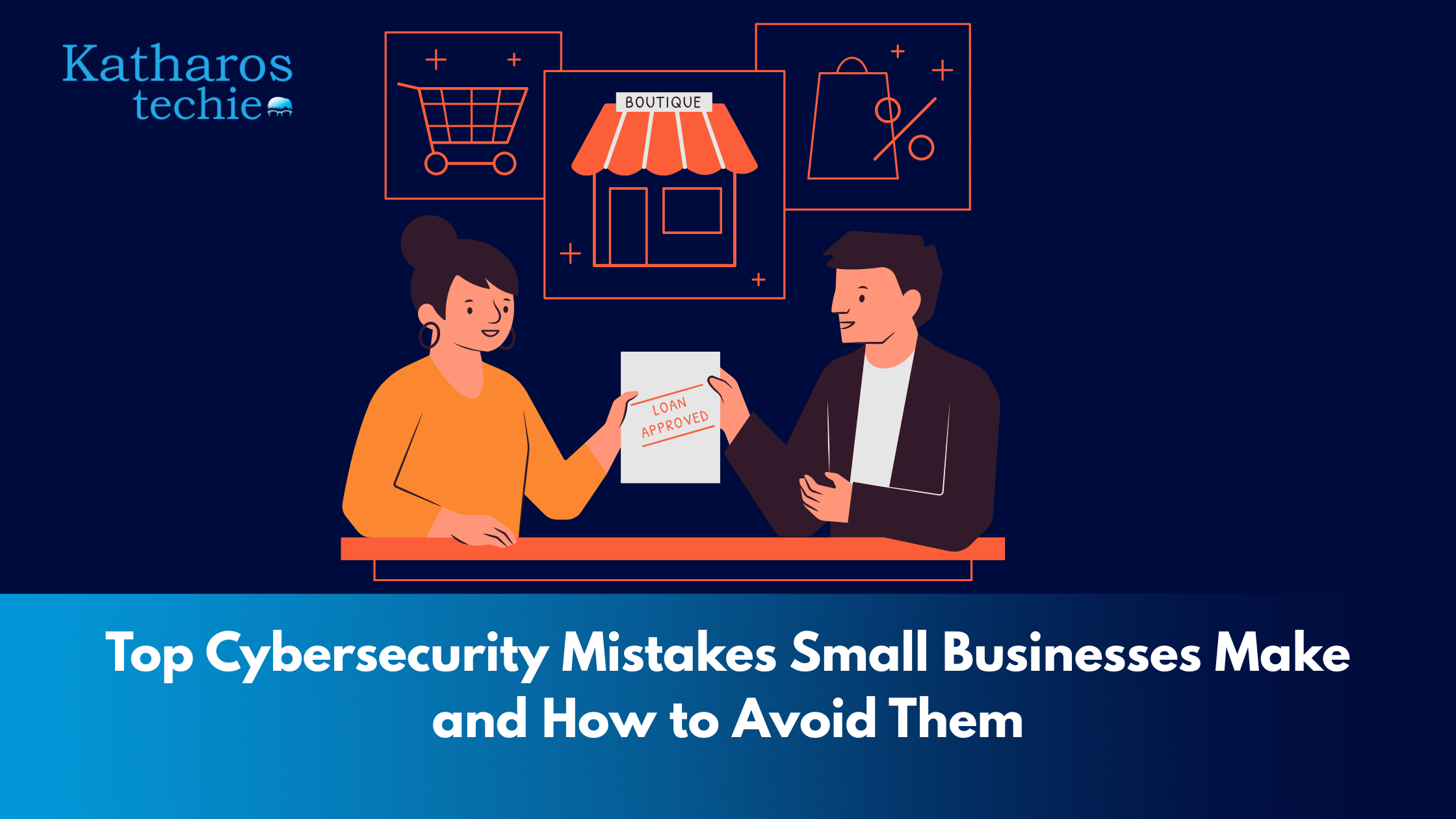
Cybersecurity is no longer a concern only for large corporations. Small businesses are now prime targets for cyberattacks because attackers assume these companies have limited budgets, fewer security controls, and understaffed IT teams. A single breach can cause financial loss, downtime, legal issues, and long-term brand damage.
The good news is that most cyber incidents are preventable. Small businesses can significantly improve their security posture by understanding the most common mistakes and taking consistent action to avoid them.
Common Cybersecurity Mistakes Small Businesses Make
Weak Password Practices
Weak, reused, or predictable passwords remain one of the biggest security risks for small businesses. Employees often use simple passwords that are easy to guess, or they reuse the same password across multiple accounts. This gives attackers an easy entry point.
Lack of Multi-Factor Authentication
Many businesses still rely on only a username and password to protect sensitive systems. Without multi-factor authentication, attackers can break in easily through credential theft, phishing, or brute-force attacks.
Ignoring Software Updates
Outdated software, plugins, and operating systems are one of the top causes of security breaches. Attackers scan the internet for known vulnerabilities and exploit businesses that haven’t updated their apps or systems.
No Employee Cybersecurity Training
Human error is responsible for a large percentage of cyber incidents. Employees who are unaware of phishing, unsafe links, or data-handling practices can easily fall for scams or unknowingly expose sensitive information.
Poor Data Backup and Recovery Planning
Many small businesses do not have automated backups or a structured disaster recovery plan. When ransomware hits, companies without backups are forced into prolonged downtime or even permanent data loss.
Lack of Network Security and Monitoring
Unsecured Wi-Fi, unprotected endpoints, and the absence of monitoring tools give attackers multiple entry points. Without visibility, businesses often do not realize they have been attacked until damage is already done.
Using Personal Devices Without Security Controls
Remote and hybrid work has increased the use of personal laptops and phones. Without security policies, these devices create vulnerabilities that attackers can exploit to access business data.
Assuming “Small” Means Safe
One of the biggest mistakes is believing that cybercriminals only target large enterprises. Small businesses are often targeted more frequently because attackers know security controls are weaker.
How Small Businesses Can Strengthen Their Cybersecurity

Implement Strong Password Policies
Encourage employees to create long, unique passwords for every account. Strong password practices reduce the risk of credential theft and unauthorized access. Password managers can help make this easier by storing and generating secure passwords.
Enable Multi-Factor Authentication Everywhere
Multi-factor authentication adds a crucial layer of protection across cloud applications, email accounts, financial portals, and internal systems. Even if a password is compromised, MFA keeps attackers out.
Update and Patch Regularly
Set up automated updates across all devices, applications, and systems. This ensures the latest security patches are installed before attackers can exploit vulnerabilities. Regular patching dramatically reduces risk.
Train Employees in Cyber Awareness
Conduct short, practical cybersecurity training sessions to help employees recognize phishing emails, suspicious links, unsafe downloads, and social engineering attempts. Ongoing awareness training reduces avoidable mistakes.
Set Up Automated Backup Systems
Use cloud-based or hybrid backup solutions to protect critical files, documents, and databases. Automatic daily or hourly backups ensure data can be restored quickly after ransomware or accidental loss.
Strengthen Network and Endpoint Security
Firewalls, secure routers, encrypted Wi-Fi, and endpoint protection tools help safeguard devices and networks. Adding monitoring tools allows businesses to detect unusual behavior early and stop attacks before they spread.
Create a Bring-Your-Own-Device Policy
If employees use personal devices, establish rules for minimum security requirements. This may include device encryption, password protection, antivirus software, and restricted access to sensitive data.
Use Access Controls and Permission Settings
Give employees access only to the systems and data they need. Limiting access reduces the risk of internal mistakes and protects sensitive information from external threats.
Secure Cloud Applications
Cloud platforms are highly secure, but misconfigurations are a common cause of breaches. Regularly review access permissions, enable default security features, and monitor cloud activity to ensure compliance with best practices.
Partner With a Managed IT Provider
Many small businesses do not have the bandwidth to handle cybersecurity on their own. Managed IT service providers offer continuous monitoring, threat detection, regular updates, incident response, and security audits. This ensures comprehensive protection at a predictable cost.
Why Cybersecurity Matters More Than Ever for Small Businesses
The digital ecosystem is expanding quickly. Cloud adoption, hybrid work, mobile access, and automation have made operations more efficient but also exposed businesses to new threats. Attackers use sophisticated tools and automated scripts to scan the internet for easy targets.
Small businesses often face:
- Financial loss from fraud or ransom payments
- Permanent data loss
- Long downtime due to unprepared recovery systems
- Loss of customer trust
- Penalties for failing to protect sensitive information
- Reputation damage that affects growth
Cybersecurity is no longer optional. It is a critical part of business resilience. When security systems are strong, operations run smoothly, employees work confidently, and customers trust the brand.
Building a Secure and Future-Ready Business
Small businesses that take cybersecurity seriously gain a real competitive edge. They reduce the risk of disruptions, protect their data, safeguard customer information, and maintain a stable operational environment.
Strong security does not always require expensive tools. Simple steps like MFA, backups, employee training, and regular monitoring can create a powerful defense. When combined with the expertise of a managed IT provider, small businesses can build a security strategy that grows with their needs.
Cybersecurity is ultimately about protecting people, systems, and the future of the business. The more proactive an organization becomes, the safer and more resilient it will be against evolving threats.


Related Blogs
Let us digitalize your ideas.
Contact Us