
How IT Automation Reduces Costs for Growing Businesses
How IT Automation Reduces Costs for Growing BusinessesBy Gauri Kulkarni | November 07, 2025 |
Introduction
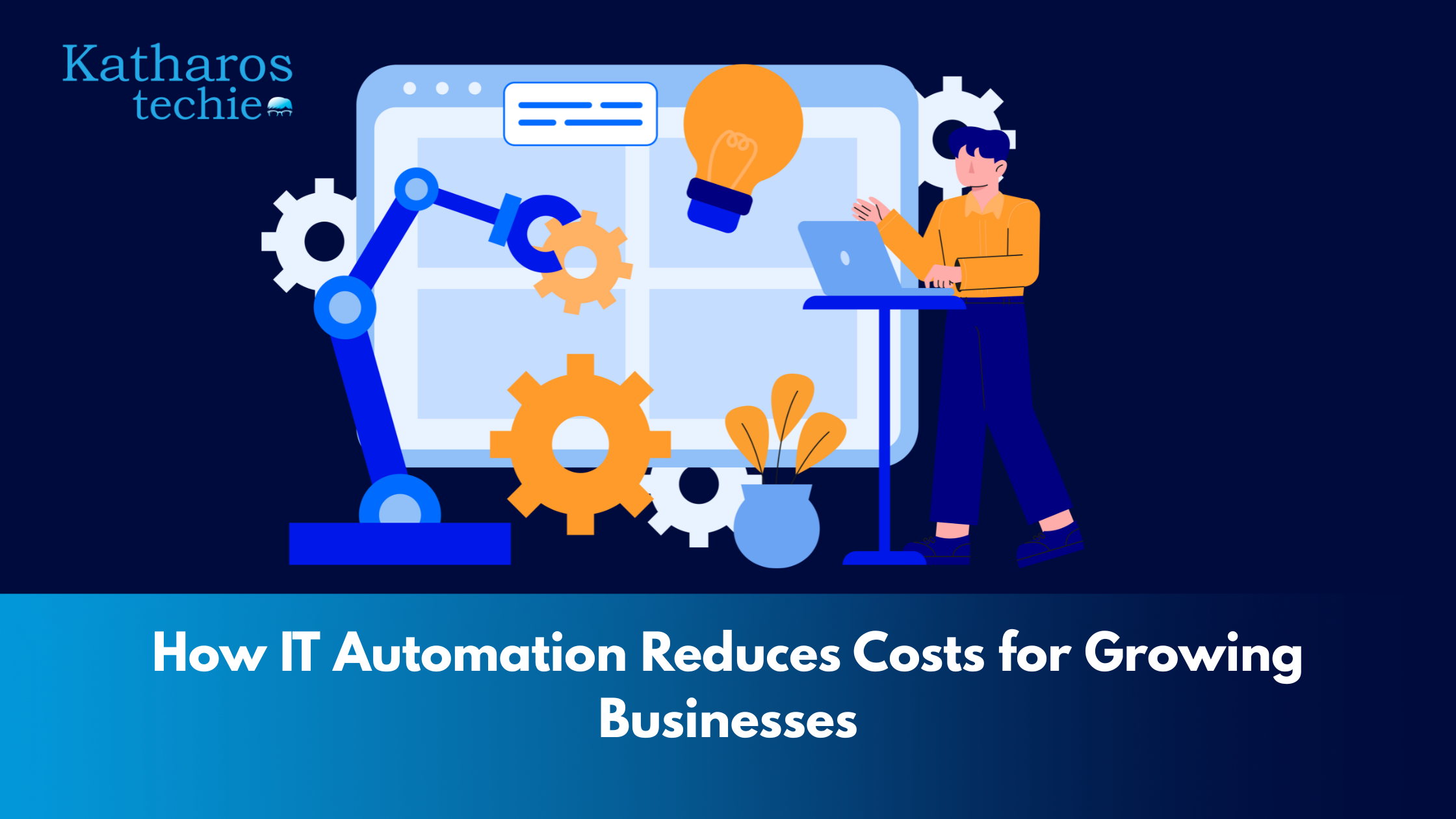
IT automation cost reduction is becoming a top priority for growing businesses trying to improve efficiency without overspending. As companies expand, manual IT tasks become time-consuming, error-prone, and expensive. Automation solves this by streamlining processes, reducing labor costs, and improving overall productivity. In this article, we explore exactly how automation cuts costs and why it’s becoming essential for modern IT teams.
What IT Automation Means for Growing Businesses
IT automation refers to using software tools and workflows to perform tasks that would normally require human effort. These include system monitoring, backups, onboarding processes, ticket management, and application updates. Instead of depending on employees to carry out these tasks every day, automation tools execute them consistently and accurately. The result is faster execution, lower human error, and reduced dependency on manual operations.
Why Growing Businesses Need Automation
Automation used to be associated with large enterprises, but that has changed. Today, small and mid-sized companies rely on automation because it cuts costs and speeds up daily operations. As businesses adopt more digital tools, the number of routine processes increases. Without automation, teams get overwhelmed and technology becomes harder to manage.
Reduced Labor Costs and More Efficient Teams
Manual tasks take up a surprising amount of employee time. Activities like generating reports, resetting passwords, responding to basic support tickets, or provisioning new devices can consume hours every week. Automation completes these tasks instantly. This allows teams to shift their attention to more strategic responsibilities such as customer experience, business development, and innovation. Companies spend less on overtime, repetitive support work, and additional staffing.
Lower IT Infrastructure and Maintenance Costs
Automation tools help businesses reduce costs associated with managing and maintaining IT infrastructure. Automated monitoring detects issues early, preventing expensive breakdowns. Automated patching keeps systems updated without needing a technician to perform the updates manually. This reduces downtime and avoids emergency repair costs. With automated backups, businesses eliminate risks associated with data loss and expensive recovery operations.
Improved Security Without Extra Spending
Security breaches are expensive, especially for growing businesses. Automated security systems monitor networks, scan for vulnerabilities, and detect anomalies in real time. Automated access control policies make sure only authorized users can access critical systems. Automated patching keeps applications secure and reduces the risks of cyberattacks. These tools deliver enterprise-level protection at a fraction of the cost of building a full in-house security team.
Reduced Software Licensing Wastage
Many businesses pay for software their employees no longer use. With automation, companies can track usage, remove unused licenses, and reassign them when necessary. Automated workflows can deactivate accounts when employees leave and remove unnecessary subscriptions that add to monthly expenses. This prevents wastage and helps businesses maximize the value of their software investments.
Faster Employee Onboarding and Offboarding
Every new hire needs device setup, email access, software configuration, and security permissions. Doing this manually for each employee takes time. Automation tools create preconfigured onboarding workflows that set up new accounts, assign permissions, and deploy applications instantly. Offboarding is equally important. Automated workflows ensure that former employees lose access immediately, which strengthens security and reduces the risk of data leaks.
Better Customer Support Efficiency
Automation improves customer support without increasing team size. Automated chatbots handle common questions, while ticketing systems route issues to the correct departments. Automated alerts allow support teams to respond to problems before customers even notice them. This reduces support costs, improves customer satisfaction, and prevents the need for additional staff.
Scalability Without Added Expenses
As businesses grow, their operations become more complex. Automation allows companies to scale their systems without hiring large teams. Automated workflows handle increased workloads effortlessly. This includes managing more devices, more applications, and more users. Businesses can grow confidently because automation ensures that expanding operations do not increase costs at the same rate.
Reduced Downtime and Fewer Interruptions
System downtime is expensive. When servers crash or software breaks, teams lose productivity and customers lose trust. Automation tools monitor systems continuously and identify issues before they escalate. Predictive maintenance ensures that hardware failures are handled proactively. Automated recovery tools help businesses restore services quickly, reducing costly interruptions.
Optimised Cloud Usage and Lower Operational Bills
Cloud services are powerful, but they can also become expensive when resources are not managed properly. Automation helps businesses optimize cloud usage by scaling resources up or down depending on demand. Automated cost monitoring highlights unnecessary spending and shuts down unused resources. This prevents surprise bills and keeps cloud spending under control.
Accurate Reporting and Better Decision-Making
Data helps businesses make smart decisions, but collecting and analyzing that data manually is slow and inconsistent. Automation generates accurate reports instantly. Companies can track performance, detect patterns, and plan for growth without investing in large analytics teams. Automated reporting supports financial planning, operational improvements, and strategic decision-making.
The Future of Business Growth Lies in Automation
IT automation is no longer a luxury. It is a core strategy for businesses that want to grow fast without increasing costs. By automating everyday processes, companies operate more efficiently, avoid costly mistakes, and invest their time in innovation. It reduces expenses across infrastructure, labor, security, and cloud operations while creating a more resilient and scalable business model. For growing businesses, automation is one of the smartest investments to ensure long-term stability and continuous growth.
Also read: http://127.0.0.1/techie/automation-and-ai-transforming-application-development-support/


Related Blogs
Let us digitalize your ideas.
Contact Us